Iran crisis stagflation etf market alert march 2026
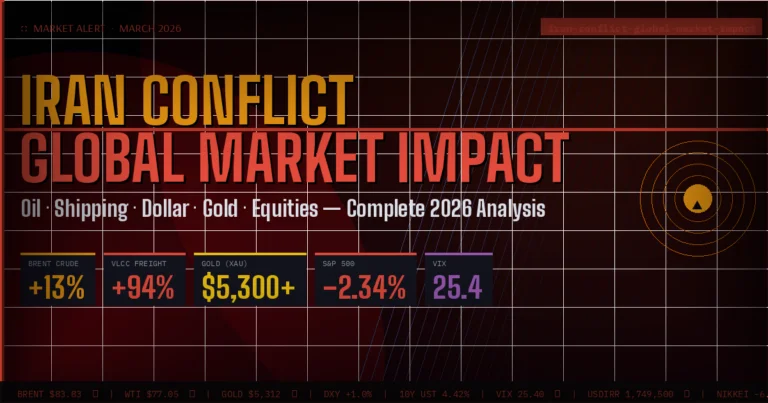
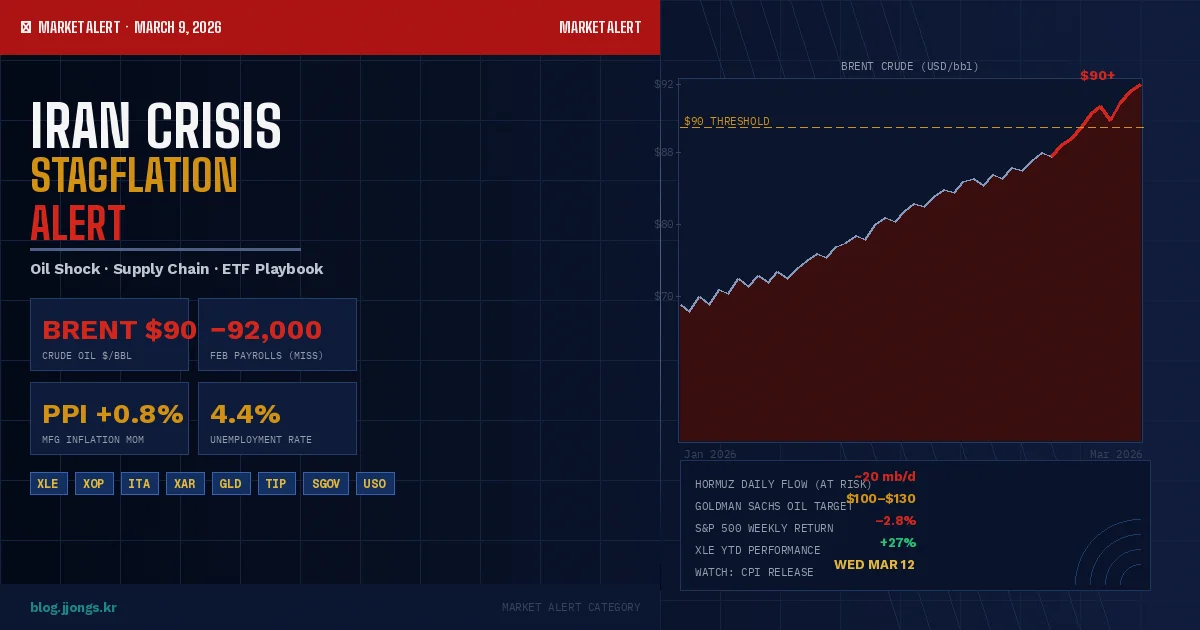
The Iran crisis stagflation threat is no longer a tail risk—it is the base case heading into this week’s critical economic data releases. Since U.S.–Israeli strikes initiated “Operation Epic Fury” on February 28, 2026, global markets have been repricing in real time: Brent crude has surged above $90 a barrel, February payrolls came in at −92,000 (a shock miss), the Producer Price Index (PPI) spiked 0.8%, and Goldman Sachs is now warning oil could reach $100 per barrel if the Strait of Hormuz remains effectively closed for five weeks. Wednesday’s CPI print and Friday’s PCE data will be the week’s defining macro events. Every investor needs a clear-eyed read on what these numbers mean—and a sector and ETF playbook ready to deploy.
This post covers: (1) the geopolitical and supply-chain reality on the ground, (2) the economic indicators announced last week plus what to expect this week, (3) the sectors most exposed—both positively and negatively—and (4) specific ETFs worth watching or acting on in the current Iran crisis stagflation environment.
Table of Contents
- The Strait of Hormuz: Why This Crisis Is Different
- Key Economic Indicators: Last Week’s Data & This Week’s Calendar
- The Stagflation Trap: What the Fed Can and Cannot Do
- Sector Impact Map: Winners, Losers & Wildcards
- ETF Playbook: Specific Funds to Watch in the Iran Crisis Stagflation Environment
- Key Risks and What Could Change the Thesis
- Bottom Line: How to Position This Week
1. The Strait of Hormuz: Why This Iran Crisis Is Different
Not all Middle East flare-ups are equal. What separates the current Iran crisis from previous episodes of elevated geopolitical risk is the physical disruption to the world’s most important energy chokepoint. According to vessel-tracking firm Kpler, the Strait of Hormuz—through which roughly 20 million barrels of oil and oil products pass daily—has not been formally closed, but commercial shipping has effectively halted. Insurance premiums from P&I Clubs (London P&I, Skuld, American Club) reached six-year highs before several major underwriters revoked war-risk coverage entirely, making transit economically unviable for most operators without sovereign guarantees.
The scale is staggering. Iran’s retaliation following the U.S.–Israeli strikes included drone attacks on Saudi Arabia’s Ras Tanura refinery complex—one of the world’s largest—and Qatar’s Ras Laffan LNG export terminal, prompting QatarEnergy to declare force majeure, suspending contractual gas delivery obligations. Qatar alone supplies roughly 20% of global LNG. According to Al Jazeera, at least five tankers have been damaged, two personnel killed, and approximately 150 ships are stranded in or near the strait.
Bypass alternatives exist in theory. Saudi Arabia’s East-West Pipeline has capacity of 5.5–7 mb/d, and the UAE’s ADCOP pipeline can handle approximately 1.8 mb/d. But combined, these routes cover barely 40–45% of normal Strait flows, and the UAE pipeline itself suffered disruptions from the conflict, according to ADI Analytics. Meanwhile, Kuwait has reportedly begun curtailing production in certain oilfields simply because storage capacity is filling up—an ominous signal of broader supply-side stress building across the region.
“The uncertainty itself is probably the most dangerous part. Supply chains hate uncertainty. It is incredibly difficult to replace the sheer volume of 20 million barrels of oil per day that usually cross the Strait of Hormuz.”
— Sarah Schiffling, Supply Chain Expert, Hanken School of Economics, via Al Jazeera
The current scenario has pushed global oil markets into a state of backwardation—where spot prices far exceed futures prices—signalling acute near-term scarcity even as long-term structural supply remains intact. Brent crude’s embedded geopolitical risk premium is now estimated by ADI Analytics at $10–$15 per barrel, with scenarios pointing toward $130 if maritime flows are fully obstructed. Qatar’s Energy Minister Saad al-Kaabi warned in a Financial Times interview that prices could reach $150 per barrel in a prolonged disruption scenario.
The Iran crisis is also accelerating a secondary supply-chain shock via naphtha and petrochemical feedstocks. Approximately 1.2 mb/d of naphtha transits the Strait, with 72% destined for Northeast Asia. South Korean and Japanese petrochemical plants are already evaluating production rate reductions as regional premiums surged to two-year highs above $42 per ton, per ADI Analytics.
2. Key Economic Indicators: Last Week’s Data & This Week’s Calendar
What Last Week Revealed
The week of March 2–6, 2026 delivered a dual macro shock that is forcing investors to reprice virtually every asset class. Here is a concise scorecard of the most market-moving releases:
| Indicator | Expected | Actual | Signal |
|---|---|---|---|
| February Nonfarm Payrolls | +55,000 | −92,000 | 🔴 Growth scare |
| Unemployment Rate | 4.2% | 4.4% | 🔴 Rising fast |
| PPI (Month-over-Month) | +0.3% | +0.8% | 🔴 Inflation reaccelerating |
| Brent Crude (week close) | ~$77–80 | $90+ | 🔴 Highest since 2023 |
| S&P 500 (weekly return) | — | −2.8% | 🔴 Worst week since Oct 2025 |
| 10-Year Treasury Yield | — | 4.14% | 🟡 Conflicted (growth vs inflation) |
The February payrolls miss was particularly significant because the prior two months were revised downward simultaneously. As The Hill reported, the U.S. economy has now added virtually no net jobs since April 2025—when major tariff announcements began. January payrolls were revised lower, and December showed outright losses. Chief economist Heather Long of Navy Federal Credit Union noted that the labor market has been stagnating for nearly a year.
In a “normal” macro environment, a payrolls miss of this magnitude would trigger immediate speculation about Federal Reserve rate cuts, providing relief to growth equities. But as Chartmill observed, Morgan Stanley Wealth Management’s Ellen Zentner put the dilemma plainly: a weakening labor market would normally argue for rate cuts, but with oil-driven inflation threatening to resurface, the Fed may feel compelled to stay sidelined for now. The Russell 2000 index of small-cap stocks, which is most sensitive to both weak domestic growth and tight monetary conditions, sold off the hardest—dropping 2.3% on Friday alone.
This Week’s Critical Data Calendar (March 9–14, 2026)
This week carries outsized significance because the incoming inflation data will be interpreted through the lens of an active energy shock. The two headline events are:
- Wednesday, March 12 – CPI (February): Prior reading was 2.4% YoY (January). The consensus before the Iran conflict escalation was already calling for a slight uptick. Given the energy shock embedded in February prices, the actual print carries significant upside risk. A reading above 3.0% alongside the jobs miss would be the most explicit stagflation signal markets have seen in decades. Watch core CPI (ex-food and energy) closely—if core is also rising, the Fed’s hands are even more tied.
- Friday, March 14 – PCE Price Index (January, delayed release): The Fed’s preferred inflation gauge. Markets will be watching whether the PCE measure corroborates the CPI signal or diverges. Given the government shutdown-related data delays that plagued late 2025, this release may cover a period before the Iran conflict fully fed into prices, making it a lagging but still directionally important read.
Secondary data to watch: initial jobless claims (Thursday), Michigan Consumer Sentiment (Friday, preliminary March reading), and any Fed officials’ public comments after the payrolls shock. As FXStreet reported, year-end rate-cut expectations have already fallen to around 40 basis points from 60 bps just a few weeks ago, with the next full cut not priced in until September.
3. The Stagflation Trap: What the Fed Can and Cannot Do
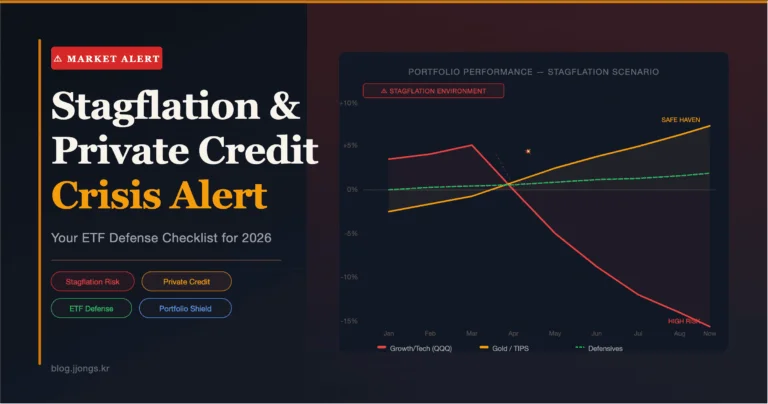
The word “stagflation”—largely absent from mainstream financial discussion for four decades—has returned with a vengeance in March 2026. Stagflation describes an economy experiencing simultaneously stagnant growth (or outright recession), rising unemployment, and persistent high inflation. It is the central banker’s nightmare precisely because the standard policy tools work in opposite directions for each problem.
As an analyst at Apollo Global Management described the bind to FinancialContent: cutting rates to address unemployment risks pouring fuel on the energy-driven inflation fire, while tightening to fight inflation risks deepening what is already a sputtering labor market. Morgan Stanley notes that the Fed will likely avoid large, sudden moves in either direction—favoring a prolonged pause while watching incoming data.
The current Iran crisis stagflation environment has several important distinctions from the 1970s analog, though the parallels are uncomfortable. Today’s economy is significantly more energy-efficient per unit of GDP than it was during the 1973–74 OPEC embargo. The U.S. is now the world’s largest crude exporter and is relatively more insulated from a direct energy supply shock than it was fifty years ago. However, the U.S. still imports refined petroleum products, meaning pump prices rise even when domestic crude production is robust.
Nomura economists summarized the global central bank dilemma in a note quoted by CNBC: a 10% oil shock may be small enough for most central banks to look through, but increases of $20–$30 per barrel make the calculus change materially, with headline CPI impacts potentially doubling or tripling and second-round effects seeping into core inflation through transportation and freight costs. Brent crude is already up roughly 25% from pre-conflict levels.
For bond investors, the 10-year Treasury yield is caught between two opposing forces: higher oil prices push yields up (inflation risk premium), while weaker growth data pulls yields down (flight to safety). The result is volatile, range-bound trading around 4.14%, with directional conviction low until CPI provides clarity on Wednesday.
The structural complication unique to 2026 is the tariff layer. The Trump administration’s broad tariff regime has already embedded cost-push inflation into goods prices independently of the energy shock. Analysts at FinancialContent’s MarketMinute describe this as making the “last mile” of returning to the Fed’s 2% inflation target effectively unreachable in the near term—even before accounting for the Iran crisis premium now baked into energy and shipping costs.
4. Sector Impact Map: Winners, Losers & Wildcards
🟢 Sectors Benefiting from the Iran Crisis Stagflation Environment
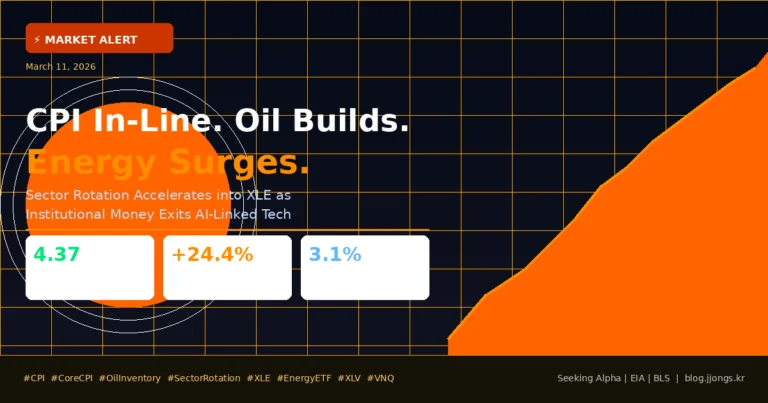
Energy (Upstream E&P and Integrated Majors): The clearest and most direct beneficiary. ExxonMobil (XOM) and Chevron (CVX) saw shares rise as the surge in crude prices expanded profit margins in real time. As FinancialContent noted, investors are treating large-cap energy companies not just as growth plays but as “inflation shelters.” U.S. LNG exporters including ExxonMobil and Cheniere Energy stand to benefit significantly from Qatar’s LNG production suspension, which created a supply gap that U.S. exporters are structurally positioned to fill—although building production capacity to exploit higher prices takes months. The broader XLE is up approximately 27% year-to-date through March 3, per ETF Trends.
Defense & Aerospace: Elevated geopolitical risk and the probability of a sustained U.S. military engagement translate directly into increased defense procurement. Morgan Stanley estimates that U.S. involvement could push defense spending close to the president’s $1.5 trillion request—a roughly 50% increase over baseline. Defense primes (Lockheed Martin, RTX, Northrop Grumman, L3Harris) benefit from both current surge orders and longer-term budget expansion. The sector has been a consistent outperformer since the conflict began.
Commodities & Materials (Selective): Gold has strengthened as a safe-haven asset amid the macro uncertainty. Industrial metals with supply chains exposed to the Middle East or Asian logistics disruptions—particularly copper and aluminum—may see price support from freight cost spikes. Shipping rates for energy tankers have surged, benefiting operators with existing vessels not caught in the conflict zone.
Domestic U.S. Energy Infrastructure (Midstream / MLPs): As global LNG buyers scramble to redirect orders away from Qatar, U.S. pipeline and LNG terminal operators gain pricing power. Companies like Kinder Morgan, Williams Companies, and ONEOK, along with Cheniere Energy, are structurally positioned to absorb redirected demand—though the timing advantage is limited by existing contractual obligations and export capacity constraints.
🔴 Sectors Under Severe Pressure
Airlines & Transportation: Jet fuel accounts for 20–25% of airline operating costs. With crude above $90, Southwest Airlines (LUV), Delta Air Lines (DAL), and United Airlines are facing the prospect of full-year 2026 earnings projections being wiped out. The Iran crisis creates a compounding problem: not only does fuel cost surge, but passenger demand for international routes through the Middle East and adjacent regions is collapsing simultaneously. The sector is experiencing what analysts at FinancialContent called a “bloodbath.”
Consumer Discretionary & Retail: Rising gasoline prices (the national average hit $3.41/gallon as of March 8, per AAA, and is expected to push toward $4) act as a regressive tax on consumer spending. Households with lower incomes spend a higher proportion of their budgets on fuel, leaving less for discretionary purchases. This is a direct negative for retailers, restaurants, leisure companies, and automotive dealers.
Petrochemicals & Specialty Chemicals: Naphtha feedstock disruptions are already forcing South Korean and Japanese plants to consider output cuts. U.S. chemical companies that rely on natural gas liquids (NGLs) for feedstock are relatively better positioned, but those with Asian manufacturing exposure face input cost spikes and logistics delays.
Small-Cap Equities (Russell 2000): Small companies are doubly squeezed: they are more dependent on the domestic U.S. economy (which is showing signs of genuine weakness), and they typically have less access to capital markets at favorable rates. The Russell 2000 fell 2.3% in Friday’s session alone and is broadly underperforming large-cap benchmarks.
Technology Growth & High-Multiple Stocks: Higher oil prices increase inflationary expectations, which push bond yields higher, which compress the present value of future earnings for high-multiple technology companies. While AI-driven names with near-term earnings visibility have shown relative resilience (Marvell Technology was a notable bright spot last week), broadly the tech sector is vulnerable if the Iran crisis stagflation scenario entrenches and the “Fed pivot” narrative fades further.
🟡 Wildcards
Shipping & Maritime: A direct but volatile play. If the Strait of Hormuz remains effectively closed, energy tanker rates spike to extraordinary levels and shipping companies with vessels outside the conflict zone benefit enormously. But the geopolitical risk of having assets near the conflict zone is real, and insurance availability remains severely constrained.
Nuclear & Alternative Energy: A sustained Iran crisis will intensify policy conversations around energy independence and accelerate interest in domestic nuclear, LNG, and renewable buildout. ETFs in this space may see increased capital flows as a longer-term thematic trade, though near-term catalysts are limited.
5. ETF Playbook: Specific Funds to Watch in the Iran Crisis Stagflation Environment
Below are the key ETFs worth monitoring and potentially acting on, organized by strategic role. This is not investment advice—it is a structured framework for understanding which instruments are most sensitive to the macro dynamics currently unfolding.
Energy Sector ETFs: The Core Trade
| ETF | Ticker | Issuer | Expense Ratio | What It Tracks | Why It Matters Now |
|---|---|---|---|---|---|
| Energy Select Sector SPDR | XLE | State Street | 0.08% | 22 S&P 500 energy stocks; XOM + CVX = ~41% | Largest, most liquid energy ETF. Best proxy for integrated major exposure. Up ~27% YTD. Deep options chain for hedging. |
| SPDR S&P Oil & Gas E&P | XOP | State Street | 0.35% | Equal-weighted E&P companies; more mid-cap exposure | Higher beta to oil prices than XLE. Exploration and production companies benefit directly from higher crude spot prices. Higher risk/reward than XLE. |
| Vanguard Energy ETF | VDE | Vanguard | 0.10% | 106 holdings; broader MSCI IMI Energy; includes mid- and small-caps | More diversified than XLE. Suitable for buy-and-hold investors wanting energy exposure without heavy XOM/CVX concentration. |
| United States Oil Fund | USO | USCF | 0.60% | WTI crude oil futures (near-month) | Direct commodity exposure to WTI crude price. Higher volatility and roll-cost risk than equity ETFs. Best for shorter-term tactical plays on oil price direction. |
| iShares Global Energy ETF | IXC | iShares | 0.41% | Global energy majors including Shell, BP, TotalEnergies, Equinor | Access to non-U.S. energy supermajors that also benefit from higher crude but may trade at different valuations and FX dynamics. |
Sources: State Street / XLE, ETF Trends, Motley Fool
Defense & Aerospace ETFs: The Geopolitical Premium Trade
| ETF | Ticker | Issuer | Expense Ratio | Key Holdings / Focus |
|---|---|---|---|---|
| iShares U.S. Aerospace & Defense | ITA | iShares | 0.40% | RTX, LMT, NOC, GD — major primes with heavy government contract exposure |
| SPDR S&P Aerospace & Defense | XAR | State Street | 0.35% | $6.3B AUM; ~40 holdings; equal-weight tilt toward mid- and small-caps; broader coverage than ITA |
| Invesco Aerospace & Defense | PPA | Invesco | 0.61% | Includes both prime contractors and commercial aerospace; diversified exposure |
The defense ETF trade is supported by two reinforcing factors. First, the Iran conflict itself is generating direct near-term procurement demand. Second, and perhaps more durable, the conflict is accelerating NATO and allied nations’ moves toward higher defense spending, expanding the global market for U.S. defense contractors over a multi-year horizon. According to Morgan Stanley, U.S. military engagement could push defense outlays close to the president’s $1.5 trillion defense budget request—a 50% increase that would structurally benefit the entire defense industrial base.
Inflation Protection & Safe-Haven ETFs
| ETF | Ticker | Role in Stagflation Portfolio |
|---|---|---|
| iShares TIPS Bond ETF | TIP | Treasury Inflation-Protected Securities. Principal adjusts upward with CPI. A classic stagflation hedge on the fixed-income side. |
| SPDR Gold Shares | GLD | Gold has historically outperformed in stagflationary environments. Safe-haven demand is elevated; geopolitical risk premium supports continued strength. |
| Invesco DB Commodity Index | DBC | Broad commodity exposure including energy, metals, and agriculture. Captures the supply-shock premium across multiple raw material categories. |
| iShares 0-3 Month Treasury Bond | SGOV | Short-duration cash equivalent. Preserves capital while earning current yield in a volatile, stagflationary environment. Reduces equity and duration risk simultaneously. |
ETFs to Reduce or Avoid
In the current Iran crisis stagflation environment, the following categories deserve heightened scrutiny and, for many portfolios, reduced weighting:
- Airline ETFs (JETS): Double exposure to rising fuel costs and weakening travel demand. The Iran crisis compounds an already difficult cost structure.
- Consumer Discretionary (XLY): Rising gasoline prices directly reduce household discretionary spending capacity. The combination of job losses and fuel cost increases is a dual headwind.
- Long-Duration Bond ETFs (TLT): If inflation reaccelerates, long-duration bonds face price declines as yields rise. The Iran crisis adds to inflation risk, making duration extension unattractive at current levels.
- Petrochemical-Heavy Materials ETFs: Naphtha feedstock disruption and Asian plant production cuts create downside for companies with significant Asian chemical exposure.
- Small-Cap Growth (IJR, IWM): The combination of weakening domestic growth, tighter-for-longer monetary conditions, and sector rotation away from domestic cyclicals creates a difficult near-term environment.
6. Key Risks and What Could Change the Thesis
No market thesis survives first contact with new facts, and the Iran crisis stagflation scenario is no exception. Investors should monitor the following variables that could materially alter the current trajectory:
Ceasefire or De-escalation: President Trump has signaled a desire for an “unconditional surrender” from Iran, apparently ruling out near-term negotiations. However, diplomatic back-channels—particularly via Qatar, Oman, and other Gulf intermediaries—remain active. Any credible ceasefire signal would likely trigger an immediate 15–20% correction in crude prices as the risk premium unwinds. Energy ETFs would give back gains quickly, while consumer discretionary and airlines would rebound sharply.
Strategic Petroleum Reserve (SPR) Release: The U.S. government has already signaled awareness of energy price sensitivity. A coordinated SPR release by the U.S. and IEA member nations could temporarily cap crude prices, though the SPR is at historically lower levels and its utility is limited in a sustained Strait closure scenario. Per CNBC, former White House energy advisor Bob McNally noted that a full Hormuz crisis could outstrip offsets provided by strategic stockpiles.
CPI Print Surprise (Either Direction): If Wednesday’s CPI comes in below expectations (say, 2.6–2.8% rather than 3%+), markets may interpret it as suggesting the Fed has room to cut in response to the jobs weakness, sparking a relief rally in growth assets. Conversely, a CPI above 3.2% could trigger further stagflation pricing, additional equity declines, and another leg up in energy and safe-haven assets.
Conflict Expansion: Iranian drone or missile strikes on additional Gulf infrastructure—particularly Abu Dhabi’s ADCOP pipeline or UAE’s Jebel Ali port—would represent an escalation beyond current market pricing. Goldman Sachs analysts have specifically flagged this scenario as a tail risk that could push Brent crude well above $100 and send markets into genuine crisis mode.
OPEC+ Supply Response: Saudi Arabia and the UAE maintain approximately 3.5–4.5 mb/d of spare production capacity. However, as ADI Analytics notes, this capacity cannot reach global markets without secure transit routes. If the Strait partially reopens, Gulf producers could quickly move to restore supply and stabilize prices—potentially more rapidly than markets currently expect.
7. Bottom Line: How to Position This Week
The Iran crisis stagflation scenario is the dominant macro theme for markets this week, and possibly for the quarter. The confluence of a genuine energy supply shock, a weak U.S. labor market, a Fed that cannot easily cut rates, and this week’s critical CPI and PCE data creates a volatile and non-linear environment where standard playbooks underperform.
The clearest tactical positioning framework for the current week looks something like this:
Overweight / Increase: Energy sector (XLE, XOP for higher beta; VDE for diversification), defense and aerospace (ITA, XAR), gold (GLD), inflation-linked bonds (TIP), short-duration cash equivalents (SGOV) as a volatility buffer. U.S. LNG producers (Cheniere, ExxonMobil, Williams Companies) benefit from the Qatari LNG gap as a longer-term structural play.
Underweight / Reduce: Airlines (JETS), consumer discretionary (XLY), long-duration Treasuries (TLT), small-cap growth (IWM), petrochemical-exposed materials. High-multiple technology names without near-term earnings visibility also warrant caution in a rising-yield environment.
Watch Closely: Wednesday’s CPI is the single most important data point of the week. A reading above 3.0% accompanied by continued oil prices above $90 would be the most explicit confirmation of the Iran crisis stagflation scenario and would likely prompt further sector rotation into energy, defense, and real assets. A softer-than-expected CPI could provide temporary relief and a “cover your shorts” moment in beaten-down sectors.
As Merlintrader put it after last week’s market close: “Oil is no longer just another commodity chart; it has become the main real-time barometer for risk assets.” Whether the Strait of Hormuz gradually reopens or the conflict deepens will determine whether the current Iran crisis stagflation pricing is a temporary shock or the beginning of a structural regime shift—but investors who have a clear-eyed sector and ETF framework ready will be far better positioned to act on either outcome.
⚡ Key Data to Watch This Week
- Wed Mar 12 — U.S. CPI (February) | Consensus: ~2.9–3.1% YoY | Key threshold: 3.0%+
- Thu Mar 13 — Initial Jobless Claims | Watch for second consecutive rise
- Fri Mar 14 — PCE Price Index (January) | Fed’s preferred inflation gauge
- Fri Mar 14 — Michigan Consumer Sentiment (Preliminary March) | Inflation expectations component critical
- All week — Brent crude price vs. $90–$100 range | Hormuz shipping data (MarineTraffic, Kpler)
⚠️ Disclaimer: I am not a licensed financial advisor. Content here is for educational purposes only and should not be considered personalized investment advice. Always do your own research before making investment decisions.